
Arlington Heights Epoxy Flooring has been installing flake epoxy floor systems in Arlington Heights, IL for more than 20 years, serving surrounding cities including Prospect Heights, Deerfield, Barrington, Lake Zurich and Wood Dale. A flake floor, sometimes called a chip floor, is the most popular coating we install in garages, because the colored vinyl chips hide dirt, salt residue and small slab blemishes while adding texture underfoot.
The chips are the part people see, but the system underneath decides how long the floor lasts. Every flake floor we install starts with a slab opened by diamond grinding, crack and spall repair, and a moisture test written into the quote. The proposal names the base coat, the flake blend and size, the broadcast density, the topcoat and the finished thickness, so you can check exactly what went down.
Flake floors work in garages, basements, mudrooms and laundry rooms, and in commercial spaces such as locker rooms, showrooms and restrooms. The build adjusts to each, from the topcoat chemistry to the amount of texture left in the surface.
How a Flake Epoxy Floor Is Built
Primer and Pigmented Base Coat
After grinding and repairs, a penetrating primer anchors the system to the concrete, followed by a pigmented base coat, usually a 100% solids epoxy. The base color is chosen to suit the flake blend, because it shows through a partial broadcast and subtly affects the overall tone of the floor even under a full one.
Broadcasting the Vinyl Flake
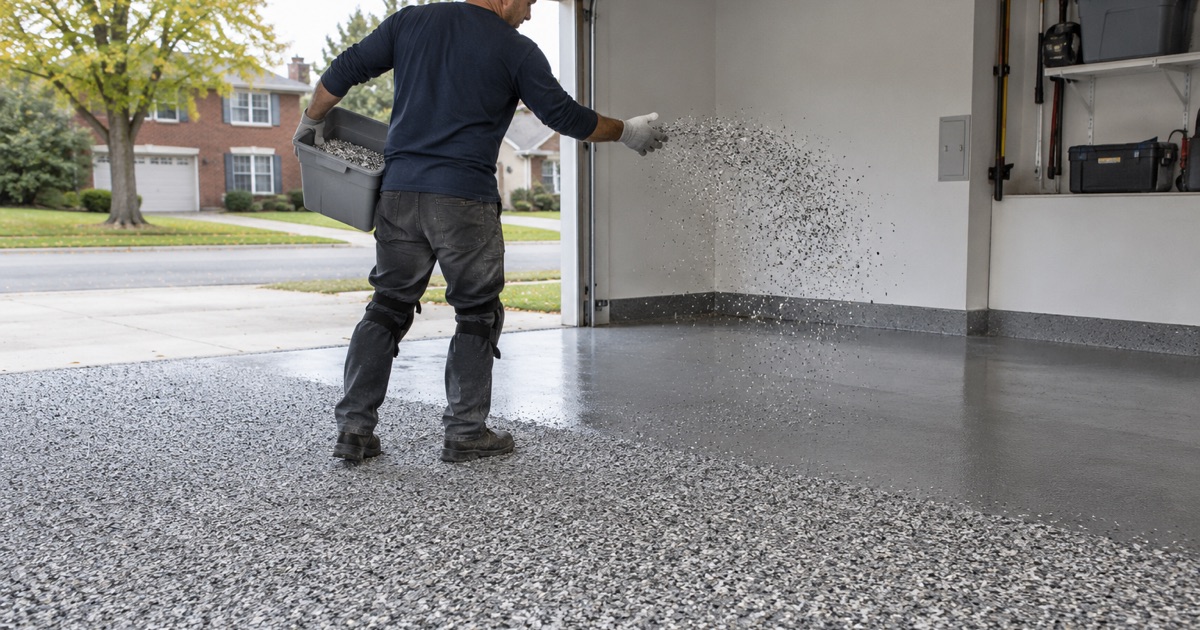
While the base coat is still wet, vinyl flakes are thrown by hand across the floor in an even pattern. For a full broadcast, chips go down until the base coat is completely covered and can hold no more. A partial broadcast leaves some base color visible for a lighter, more open speckle. Either way, the density is set in the proposal.
Scraping and the Clear Topcoat
Once the base coat cures, the floor is scraped with a hard blade to knock down standing chip edges, then vacuumed to remove loose flakes. A clear polyaspartic or polyurea topcoat goes on next, sealing the chips in place, protecting them from abrasion and setting the final texture. A thicker topcoat makes the floor smoother; a thinner one leaves more grip.
Choosing a Flake Blend and Size
Chip Size and Pattern
Flakes come in several sizes, from small chips that read as a fine granite-like speckle to larger chips that create a bold, distinct pattern. Smaller chips give a more uniform look and lay flatter, while larger chips make each color more visible. We show you each size on sample boards so you can judge the pattern at standing height.
Color Blends That Hide Dirt
Blends range from soft grays and beiges to high-contrast mixes with black, white and accent colors. In garages that take winter road salt, medium-toned blends hide white salt film and gray slush marks better than very light or very dark floors. We help you choose based on how the space is used, not just how a sample looks indoors.
Coordinating Base and Blend
The base coat color and the flake blend work together. A gray base under a gray blend gives a cohesive, even floor, while a contrasting base adds depth under a partial broadcast. We match the base to the dominant tone of the flake so any small gaps in coverage disappear rather than showing as spots.
Texture, Grip and Cleaning
Texture From the Flake and Topcoat
The texture of a flake floor comes from the chips beneath the topcoat. A single topcoat over a full broadcast leaves a lightly textured surface with good grip, while a second coat smooths it toward an easy-clean finish. We set the texture to the space, with more grip in garages and entries and smoother finishes in basements and indoor rooms.
Handling Winter Brine
A flake floor’s clear topcoat keeps calcium chloride brine and rock salt from soaking into the concrete beneath. Salt film dries white on any floor, but on a sealed flake surface it squeegees and mops away instead of eating at the slab. We recommend squeegeeing slush toward the door and rinsing occasionally through the winter to keep the topcoat clear.
Added Grip for Wet Areas
For mudrooms, ramps, locker rooms and other areas that stay wet, a fine aggregate can be added to the topcoat for more slip resistance without changing the look much. More texture makes a floor slightly harder to mop, so we discuss the balance between grip and cleanability before we finish the floor.
Where Flake Floors Work Best
Garages That Take Hot Tires and Salt
Flake floors are built for garages. A full broadcast adds thickness and texture, and the polyaspartic topcoat resists hot tire pickup, oil and road brine. Over a ground, repaired slab, the system holds up to cars parked on it daily through a northern Illinois winter, and its pattern hides tire marks between cleanings.
Basements, Mudrooms and Laundry Rooms
Indoors, flake floors give a finished, easy-care surface that hides everyday dust and scuffs. Basements need a moisture test first, and where readings call for it, a moisture-mitigation primer goes under the system. Laundry rooms and mudrooms benefit from a little extra texture and coved edges that keep water off the walls.
Locker Rooms, Showrooms and Restrooms
Commercial spaces use flake floors where they want durability with a finished look. Locker rooms and restrooms benefit from texture, seamless surfaces and integral cove bases for easy cleaning, while showrooms often choose bolder blends and smoother topcoats. We schedule commercial installs around business hours and use fast-curing topcoats where an area must reopen quickly.
- 20+ Years Coating Concrete
- Moisture Tested Before Quoting
- Itemized Written Proposals